How to source genuine Cisco switches with a BOM: a buyer's checklist
Most Cisco switch orders that go wrong were lost in the first message. This checklist covers what a sourcing desk needs on a bill of materials to price the right switches the first time.
Start with the design, not the catalogue
Nobody's BOM arrives clean. It comes out of a design tool, a site survey, or — more often — a spreadsheet somebody built at midnight before a tender deadline. The models are right, give or take. The quantities drift. And somewhere around line 40 there's a switch with no power supply, no licence and no rack kit, because the tool that generated the list doesn't think about those things.
That is fine. Turning a design list into an orderable list is most of the job. But the conversion has to happen before pricing, not after the goods land — because the difference between the two lists is never the switches. It's everything that bolts onto them.
Licences: the suffix is the product
Take a line like C9200L-24P-4X-E. The string looks like one product. It is actually three decisions wearing one part number: the hardware, the licence tier baked into the suffix, and the term that licence runs for. Quote the hardware against the wrong tier and the price is wrong in a way nobody notices until the switches are racked and the features the design assumed aren't there.
So the first pass over any Catalyst list is boring and essential: pull the licence tier out of every line, say it back to the buyer in plain words, and get it confirmed. Essentials versus Advantage is not a detail. On a forty-switch rollout it is the single biggest line-level price swing on the page.
Modules, optics and the lines that go missing
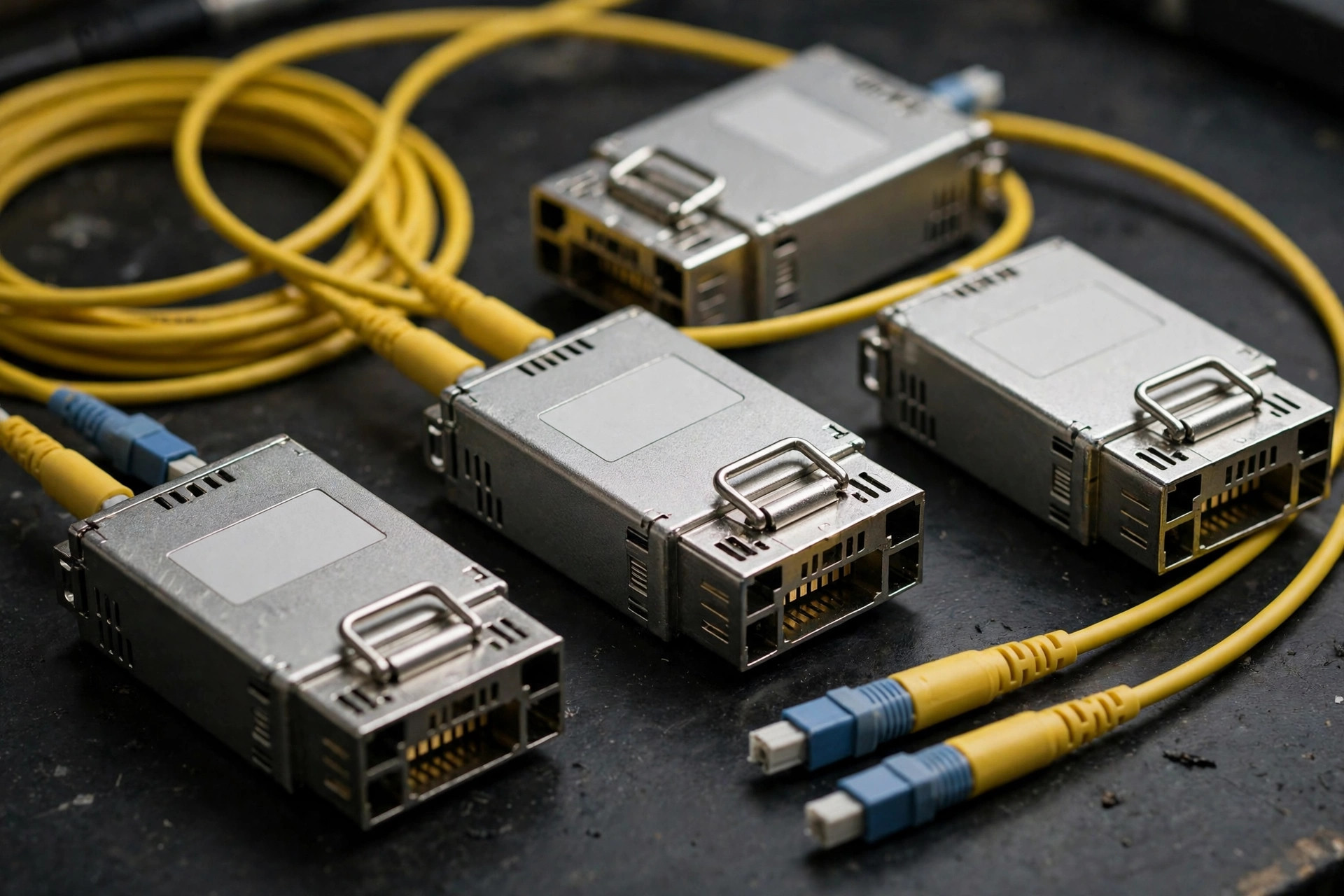
Uplink modules are the classic casualty. A core switch gets specified, somebody prices the chassis, and the module that makes the uplinks work never makes it onto the list — or it does, and the optics for it don't. SFPs are worse: they're small, they're cheap relative to the switches, and a list with the wrong reach or the wrong fibre type still looks complete.
Work it from the parent device outwards. Every switch line should drag its modules behind it, every module its optics, every optic its fibre type and reach. If a line has no children, ask why. Sometimes the design genuinely reuses existing optics. Sometimes nobody looked.
Power and stacking — the five-percent lines
Power supplies and stacking cables are where the money quietly leaks. A second PSU per switch is a rounding error next to the switch itself, until you multiply it by sixty switches and add the stacking cables nobody listed because the tool shows a stack as one logical unit. Rack kits, console cables, power cords in the right plug standard — each one is trivial. Together they are the difference between an install that starts on Monday and one that starts with an emergency order.
None of this is exotic. It is a checklist, run the same way every time, by whoever prices the list. Which is rather the point of writing it down.
Mixed lists are the normal case
Real project lists refuse to stay inside one brand. The access layer is Catalyst, the wireless is UniFi or Aruba, the firewall is Fortinet, and there's a Nexus pair in the middle doing something the rest of the list only hints at. Buyers sometimes apologise for that. Don't. A mixed list priced by one desk gets consolidated into one shipment, checked as one order, and argued about with one counterparty when a line needs to flex.
What a mixed list does need is honesty about the seams. Which lines are model-exact because the design depends on them? Which lines can move to a neighbouring model if the price or the timing is better? Mark them before quoting, not during the argument afterwards.
What to send, and what happens next
Send the list as it stands — spreadsheet, PDF, screenshot of a whiteboard, all fine — with quantities, the delivery city, and a note on which lines are fixed and which can flex. The reply should come back as a validated list: every line priced or flagged, missing children added and marked as added, licence tiers stated in words. If the reply is just a column of prices against your original lines, send it back. The validation is the service.
The repeat order is the real test
The first order tests whether a desk can quote. The repeat order tests whether it kept notes. Project buyers roll out in phases — a floor this quarter, a building next — and the second list is never quite the first list with bigger quantities. A licence tier changed. A model in the original design went end-of-sale. The optics that were reused last time are not being reused this time.
A good repeat quotation shows its working against the original: this line is unchanged, this line moved to the successor model and here is why, this accessory was on the first order and is missing from your new list — deliberate? None of that takes genius. It takes the first order's paperwork, kept properly, and a desk that reads it before quoting the second. When you find one that does, the BOM checklist mostly runs itself: the design decisions are already made, and what remains is counting carefully.
Which, in the end, is what the checklist is for. Not suspicion, not ceremony — counting carefully, in the open, before the money moves.
Consolidation is part of the price
A priced BOM is not finished when the lines are priced. How the goods travel decides a second layer of cost that a line-by-line reading never shows: split shipments multiply freight, customs handling and receiving work, so the same list can land at noticeably different totals depending on how it moves. The quotation from this desk consolidates the confirmed lines into one shipment to the named city by default, and shows the freight as its own figure, so the consolidation saving is visible rather than assumed. If a project would rather split — one site in a hurry, the rest following — that is a delivery instruction stated on the order, and the freight picture is reworked per split while the goods prices hold. Either way, the decision is made on the quotation, with numbers attached, instead of being discovered on the first freight invoice.
Delivery terms belong to the same conversation. The desk quotes on FOB, CFR, CIF and EXW terms, and the term named decides who carries freight and risk at each stage; a quotation states the term it is priced on, so an infrastructure budget approved against the quotation is approved against the whole cost of getting the goods in, not just the cost of the goods.
What a validated list looks like when it comes back
Set expectations for the document itself. The quotation mirrors your list in the order you sent it. A line that prices cleanly shows its price and nothing else. A line the desk could not price as written shows the question that would settle it — a missing suffix, an open uplink choice, a host that was never named — attached to that line, not buried in a covering email. Lines the junction checks suggest adding, such as a module a specified host implies or an optic a port count needs, appear after your list, clearly marked as suggestions. Nothing of yours is dropped, merged or quietly replaced.
That shape makes approval a five-minute job for a project engineer: read down the list, answer the flagged questions, accept or strike the suggestions. It also makes the quotation the document the receiving team later checks against, because it records not just what was bought but what was assumed — and an assumption written down in advance is a dispute that never happens.